
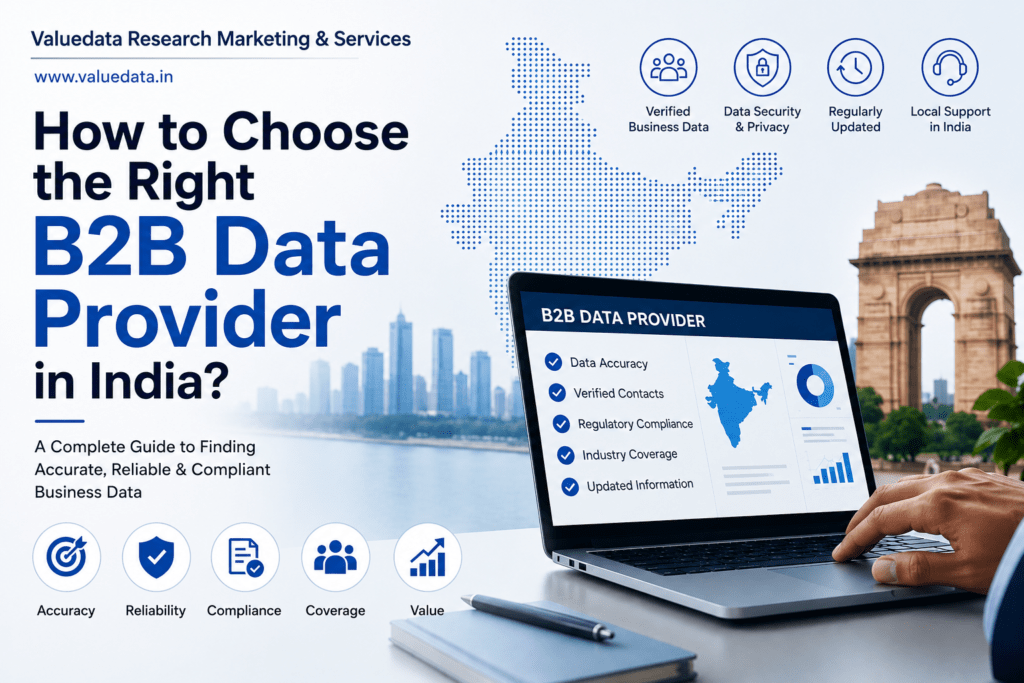
Every B2B company needs good leads. But leads are only useful if the data behind them is correct. That is why picking the right B2B data provider in India matters so much. A good provider saves you time. A bad one wastes your budget and hurts your brand.
In this guide, we will walk through the key things to check. We will also show you simple ways to test a provider before you commit. So, let’s get started.
First, let’s understand the stakes. Your sales team runs on data. If the data is old or wrong, your team calls the wrong people. As a result, your conversion rates drop. Also, your emails may bounce, which can hurt your sender reputation.
On the other hand, a reliable B2B data provider in India gives you accurate, updated, and relevant contacts. This means your sales and marketing teams can focus on selling instead of fixing bad lists. Therefore, choosing wisely is not just a nice-to-do task. It is a business decision that affects revenue.
Before you search for a B2B data provider in India, take a step back. Ask yourself a few questions:
Once you have clear answers, it becomes easier to filter providers. Otherwise, you may end up buying a huge database that doesn’t fit your niche. So, always start with your own requirements, not the provider’s sales pitch.
Accuracy is the first thing to test. After all, even the most affordable B2B data provider in India is useless if the data is outdated. Here’s how you can check accuracy:
If the bounce rate is high, that’s a red flag. Similarly, if job titles or company names don’t match, move on. A trustworthy provider will happily share a sample before you buy in bulk.
Coverage matters just as much as accuracy. A good B2B data provider in India should offer strong coverage across industries, company sizes, and job roles. For example, if you sell HR software, you need HR decision-makers. If you sell to manufacturing firms, you need procurement heads.
Additionally, check if the provider covers:
Broad and deep coverage means fewer gaps in your outreach campaigns. As a result, your sales team spends less time searching manually.
Data decays fast. People change jobs, companies shut down, and phone numbers get reassigned. Therefore, an ideal B2B data provider in India should refresh its database regularly. Ask the provider:
If a provider cannot answer these clearly, that’s concerning. Fresh data leads to fresh results. So, always prioritize providers who invest in regular updates.
Support often gets overlooked, but it matters a lot. Data issues can happen anytime, so you need a provider who responds quickly. When evaluating a B2B data provider in India, ask:
Good support turns a one-time purchase into a long-term partnership. Meanwhile, poor support can leave you stuck when something goes wrong.
Every business is different. Therefore, the right B2B data provider in India should allow customization. For instance, you might need:
Customization ensures you only pay for data that’s actually useful. Instead of buying one big generic list, you get a targeted list built for your exact use case.
While comparing options, watch out for these warning signs:
If you notice two or more of these red flags, it’s best to walk away. After all, a small saving today can lead to bigger losses later.
Let’s summarize the process into simple steps:
Following these steps ensures you don’t rush into a bad deal. Instead, you make a confident, informed choice.
If you are searching for a reliable B2B data provider in India, vendor like ValueData focus on verified, updated, and India-specific business data. They offer sample testing, filtered databases, and support that helps sales teams move faster. Many companies prefer providers like this because they combine accuracy with ease of use, which is exactly what growing businesses need.
For a broader understanding of data quality standards worldwide, you can also refer to resources from Gartner, which regularly publishes research on data management and quality practices for B2B marketers.
Choosing the right B2B data provider in India is not a one-time task. It is an ongoing relationship that impacts your sales pipeline every single day. So, take your time. Test the data. Ask hard questions. And don’t be afraid to say no if something feels off.
In the end, the right provider will feel like a partner, not just a vendor. They will help your team focus on selling, not fixing bad data. And that, ultimately, is what drives real business growth.
📩 enquiry@valuedata.in | 📞 +91 70214 90895


Leave a Comment